Furnace Repair vs. Replacement: Which Is Right for Your Home?
A good rule of thumb is this: if your furnace is more than 15 years old and the repair is expensive, replacement is often the better long-term choice. On the other hand, newer systems with isolated problems can usually be repaired cost-effectively.
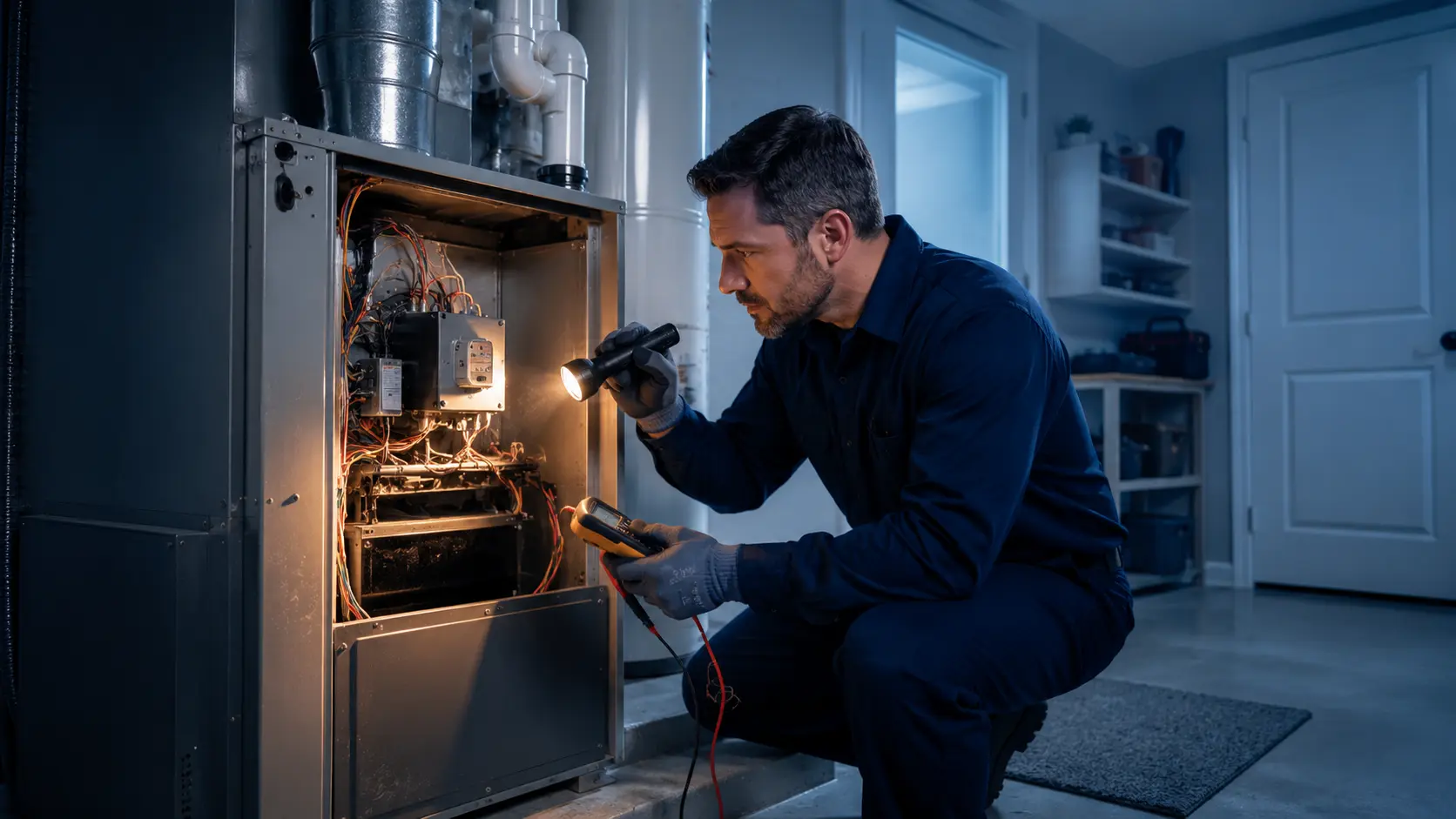
When your furnace stops working—or starts showing signs of trouble—the biggest question isn't just how to fix it. It's whether fixing it is actually the smartest investment.
The right decision depends on several factors, including the furnace's age, repair history, efficiency, and the cost of getting it back up and running. This guide will help you compare furnace repair vs replacement so you can make a confident decision before colder weather arrives.
Start With the Age of Your Furnace
The age of your heating system is one of the strongest indicators of whether repair or replacement makes the most financial sense.
Most gas furnaces have an expected lifespan of 15 to 20 years with proper maintenance. Some last even longer, but efficiency gradually declines and major components become more likely to fail.
Here's a simple guideline:
| Furnace Age | General Recommendation |
|---|---|
| Under 10 years | Repair is usually the best option. |
| 10–15 years | Depends on repair cost and overall condition. |
| 15–20+ years | Replacement becomes increasingly worth considering. |
Age alone shouldn't determine your decision, but it should influence how much you're willing to invest in repairs.
If your furnace is approaching two decades of service, putting significant money into major components may simply delay an inevitable replacement.
When Repair Makes Sense
Not every heating problem means you need a new furnace. Many repairs are relatively inexpensive and can restore years of reliable service.
Repair often makes sense when:
- Your furnace is less than 10–12 years old
- This is the first significant repair
- The heat exchanger is in good condition
- Repair costs are relatively modest
- The system has been maintained regularly
- Your home heats evenly and efficiently
Some common repairs include:
- Igniters
- Flame sensors
- Capacitors
- Blower motors
- Thermostats
- Limit switches
- Draft inducer motors
- Control boards
Replacing one of these components is often far less expensive than replacing the entire system.
A qualified technician should explain exactly what failed, why it failed, and whether additional age-related issues are likely to appear in the near future.
When Replacement Makes More Sense
Sometimes repairing an aging furnace becomes more expensive than investing in a new system. These situations usually indicate replacement deserves serious consideration.
The System Is 15+ Years Old
Older furnaces simply have more wear.
Even if today's repair is manageable, another component may fail next winter—or even later this season.
Modern heating systems also operate much more efficiently than many furnaces installed 15–20 years ago.
Replacing an older system can provide:
- Lower monthly utility bills
- Quieter operation
- Better airflow
- More consistent temperatures
- Improved safety
- Manufacturer warranties
You've Had Multiple Repairs This Winter
One repair isn't unusual. Several repairs within a single heating season tell a different story.
If you've recently replaced multiple components and your furnace continues developing new problems, you're likely seeing the effects of overall system wear rather than isolated failures.
Eventually, repair costs begin adding up faster than replacement costs.
It's Not Heating Evenly
Some rooms stay warm. Others never seem comfortable.
Uneven heating doesn't always mean the furnace itself is failing—it could involve ductwork or airflow restrictions—but an aging furnace that struggles to distribute heat consistently often indicates declining performance.
Before recommending replacement, a reputable HVAC company should evaluate:
- Airflow
- Duct condition
- Filter restrictions
- Thermostat location
- System sizing
Sometimes the furnace isn't actually the problem.
Your Gas Bills Are Rising Without Explanation
Have your heating costs steadily increased over the past few winters?
Older furnaces gradually lose efficiency.
Burners become less effective.
Heat exchangers accumulate wear.
Blower motors consume more electricity.
Longer run times increase gas consumption.
If your home hasn't changed but your utility bills have, your furnace may no longer be operating efficiently enough to justify additional repairs.
It Was Sized Incorrectly to Begin With
Not every comfort problem is caused by age. Some furnaces were simply installed incorrectly from day one.
An Oversized Furnace May:
- Cycle on and off constantly
- Produce uneven temperatures
- Wear components prematurely
An Undersized Furnace May:
- Run continuously
- Struggle during colder weather
- Never fully heat the home
If your heating system has never performed well, replacement with properly sized equipment can solve problems that repairs never will—see what size HVAC system your home needs to avoid repeating the mistake.
A Quick Cost Comparison Framework
One of the simplest ways to evaluate whether to repair or replace your furnace is to compare repair costs against replacement value.
Many HVAC professionals follow a version of the "50% Rule."
If the furnace is approaching the end of its expected lifespan and the repair costs roughly half the price of replacement, replacement often provides better long-term value.
It's also worth considering:
- Future repair likelihood
- Remaining equipment lifespan
- Energy savings
- Warranty coverage
- Reliability during winter
Sometimes the cheapest repair today becomes the most expensive decision over the next several years.
What Replacement Actually Gets You
A new furnace isn't simply about restoring heat. Today's systems provide several meaningful improvements over older equipment.
Benefits often include:
- Improved energy efficiency
- Lower gas bills
- Quieter operation
- Better temperature consistency
- More reliable ignition systems
- Improved indoor comfort
- Smart thermostat compatibility
- Manufacturer warranties
- Reduced repair frequency
Many homeowners are surprised that replacing an aging furnace also improves airflow and comfort throughout the house—not just heating performance. See the benefits of preventative HVAC maintenance to keep a new system running at its best.
What to Ask a Technician Before You Decide
A trustworthy HVAC company shouldn't immediately recommend replacement simply because your furnace stopped working. Instead, ask questions such as:
- What exactly failed?
- Is this repair likely to solve the problem long-term?
- Are other major components showing signs of wear?
- Approximately how much life remains in the system?
- Will replacement noticeably reduce my utility bills?
- Is my current furnace properly sized?
- What warranties are included with repair versus replacement?
A technician who explains both options clearly is helping you make an informed decision—not making the decision for you.
Frequently Asked Questions
How do I know if my furnace needs to be repaired or replaced?
Consider the furnace's age, repair history, efficiency, and the estimated repair cost. Newer systems with isolated issues are usually worth repairing, while older furnaces facing major repairs often make replacement the better investment.
How long do gas furnaces usually last?
Most gas furnaces last 15 to 20 years with regular maintenance. Proper tune-ups and filter changes can help maximize their lifespan.
Is it worth repairing a 15-year-old furnace?
Sometimes, yes. Minor repairs may still be worthwhile. However, if the repair is expensive or multiple components have already failed, replacement often provides better long-term value.
How much does furnace replacement typically cost?
Replacement costs vary depending on furnace efficiency, home size, installation complexity, ductwork, and equipment selection. The best way to receive an accurate estimate is through an in-home evaluation by a qualified HVAC professional.
Make the Decision With Confidence
Choosing between repairing and replacing your furnace isn't always straightforward.
The best decision depends on the age of the equipment, the nature of the repair, your long-term plans for the home, and how well the system has been performing overall.
A professional inspection can help you understand not only what's wrong today, but what you're likely to face over the next several heating seasons.
That way, you can invest confidently instead of reacting to the next unexpected breakdown.
Not sure which side of the line you're on?
Get an honest diagnosis and upfront quote—we'll tell you straight whether repair or replacement makes more sense.