Signs It's Time to Replace Your Air Conditioner
If you're wondering whether you should repair your air conditioner or replace it altogether, a good rule of thumb is this: if your system is more than 10–15 years old and facing a major repair, replacement is often the smarter long-term investment.
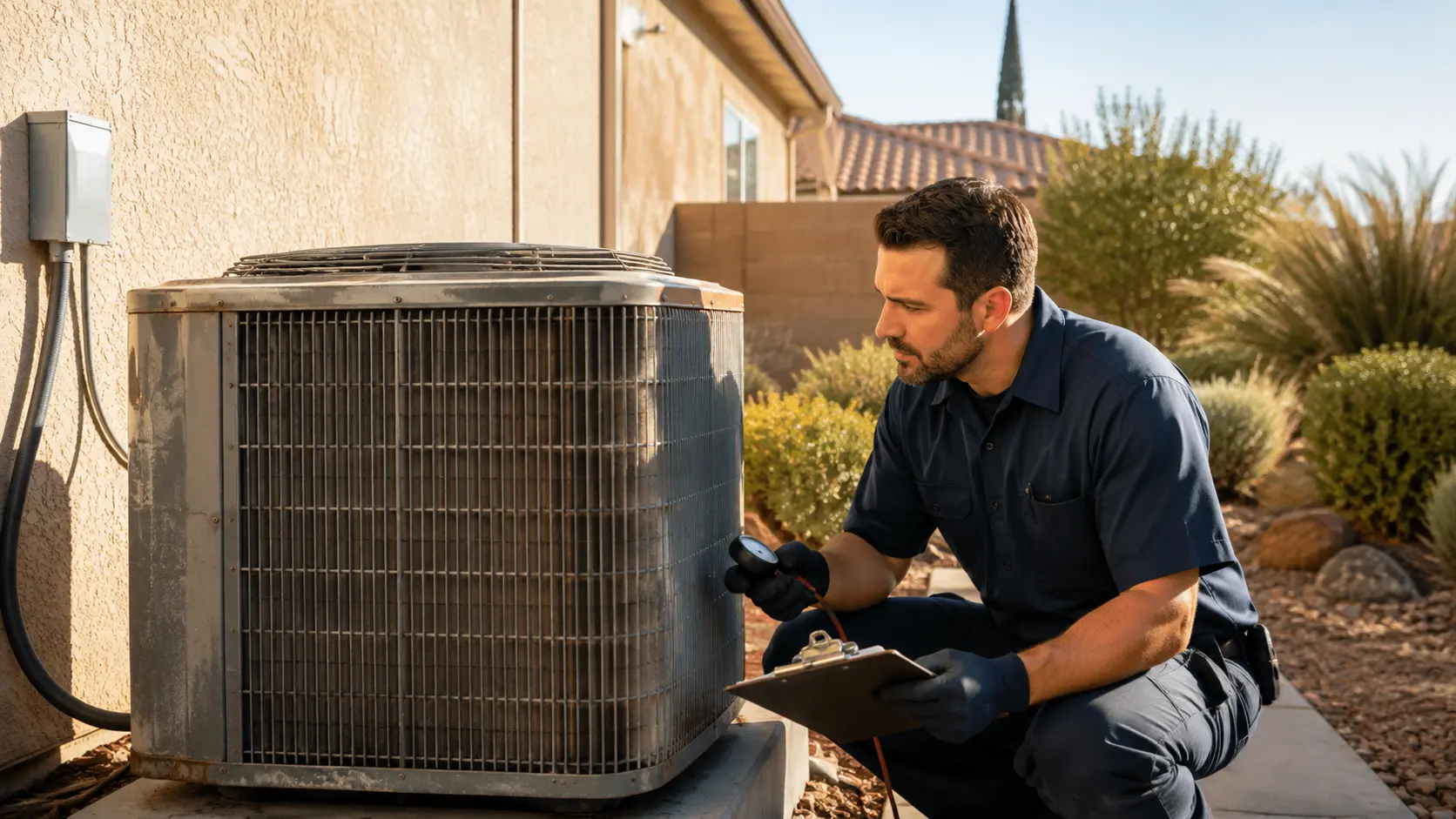
That doesn't mean every older system needs to be replaced immediately. Many air conditioners continue operating well beyond a decade with proper maintenance. However, as systems age, they become less efficient, repairs become more frequent, and keeping your home comfortable—especially during Fresno's triple-digit summers—becomes increasingly difficult.
Knowing the signs it's time to replace your air conditioner can help you avoid pouring money into a system that's nearing the end of its useful life.
The 8 Signs You Need a New AC
It's Over 10–15 Years Old
One of the biggest factors is simply age.
Most central air conditioners are designed to last 10 to 15 years, although many well-maintained systems can continue operating for a few years longer.
As equipment ages, however:
- Efficiency declines
- Components wear out
- Repairs become more common
- Replacement parts become harder to find
- Energy consumption increases
If you're asking yourself, "Is my AC too old?", checking the installation date is the best place to start.
An older system isn't automatically a problem—but it should make you think carefully before investing in major repairs.
Repairs Are Becoming Frequent (or Expensive)
Every HVAC system eventually needs repairs.
The question isn't whether your AC has ever needed service—it's how often.
If you've recently replaced:
- A capacitor
- Fan motor
- Contactor
- Compressor components
- Refrigerant leaks
- Electrical controls
…and another major repair is already being recommended, it's worth considering replacement instead.
Small repairs every few years are normal. Multiple repairs within a short period usually indicate the entire system is reaching the end of its lifespan.
Your Energy Bills Keep Climbing
Have your summer electric bills steadily increased—even though your family's habits haven't changed?
Older air conditioners gradually lose efficiency. Dirty coils, worn compressors, aging motors, and declining refrigerant performance all force the system to run longer to produce the same amount of cooling.
The result is:
- Longer cooling cycles
- More electricity consumption
- Higher monthly utility bills
Today's high-efficiency systems often use significantly less electricity than equipment installed 10–15 years ago, helping offset replacement costs over time.
It Uses R-22 (Freon) Refrigerant
If your system still uses R-22 refrigerant (often called Freon), replacement deserves serious consideration.
Production of R-22 has been phased out in the United States. While existing systems can still legally be repaired, replacement refrigerant has become increasingly scarce and expensive.
That means a relatively small refrigerant leak can suddenly become an extremely costly repair.
Modern systems use environmentally friendlier refrigerants that are more readily available and designed to meet current efficiency standards.
Your Home Never Feels Evenly Cool
Some rooms feel freezing. Others remain warm no matter how low you set the thermostat.
Uneven cooling can sometimes be caused by ductwork issues or airflow restrictions, but it can also indicate an aging air conditioner that's no longer capable of delivering adequate cooling throughout the home.
This is especially noticeable during Fresno's hottest afternoons, when older systems often struggle to keep up.
If your home has developed persistent hot and cold spots despite regular maintenance, replacement may provide a lasting solution.
It's Making New or Unusual Noises
Air conditioners naturally produce some operating noise.
What you shouldn't hear are:
- Grinding
- Squealing
- Banging
- Rattling
- Buzzing
- Loud humming
These sounds often point to worn bearings, failing motors, loose components, or compressor problems.
While some issues are inexpensive to repair, repeated mechanical failures usually indicate broader wear throughout the system.
Humidity Feels Harder to Control
Your air conditioner doesn't just cool your home. It also removes moisture from the indoor air.
If your house feels:
- Sticky
- Damp
- Muggy
- Uncomfortable despite cool temperatures
…your aging system may no longer be dehumidifying effectively.
Proper humidity control improves comfort, protects wood flooring and furniture, and can even make your home feel cooler without lowering the thermostat.
It's Not Keeping Up With Central Valley Heat
This is perhaps the biggest warning sign for homeowners in Fresno.
When temperatures reach 100°F to 110°F, older systems often run continuously without ever reaching the thermostat setting.
If your AC:
- Runs all afternoon
- Never shuts off
- Struggles to cool below 78–80°F
- Takes hours to recover after opening doors
- Leaves your home uncomfortable during heat waves
…it may simply no longer have the capacity or efficiency required for Central Valley summers.
Sometimes repairs help. Other times, replacement is the more economical long-term solution.
The "50% Rule": A Simple Way to Decide
HVAC professionals often use what's known as the 50% Rule.
If the cost of repairing your current system approaches 50% of the cost of replacing it, and the unit is already nearing the end of its expected lifespan, replacement is usually the better investment.
For example:
- A 13-year-old system needs a compressor replacement costing several thousand dollars.
- A new high-efficiency system would provide another 15–20 years of dependable cooling.
In many cases, putting significant money into an aging system doesn't provide the best long-term value.
Every home is different, though. A professional evaluation can help you compare repair costs, remaining lifespan, energy savings, and warranty options before making a decision.
What Replacement Actually Gets You (Beyond Just Cooling)
Many homeowners think replacing an air conditioner simply means colder air.
Modern HVAC systems offer far more than that. Benefits often include:
- Lower monthly energy bills
- More consistent temperatures throughout the home
- Improved humidity control
- Quieter operation
- Better indoor air quality
- Smart thermostat compatibility
- Greater reliability during extreme weather
- Manufacturer warranty protection
- Reduced likelihood of emergency repairs
Perhaps most importantly, a properly sized and professionally installed system provides peace of mind during Fresno's hottest months, when dependable cooling matters most. See what size HVAC system your home needs to make sure a replacement is sized correctly from the start.
Repair or Replace?
Not every repair means it's time for a new system. A trustworthy HVAC contractor should explain both repair and replacement options clearly so you can make the decision that fits your home and budget—not pressure you into equipment you don't need.
Repair Often Makes Sense
In many cases, replacing a single component is far more cost-effective than installing new equipment:
- Capacitor
- Contactor
- Blower motor
Consider Replacement If Your AC Is:
- More than 10–15 years old
- Requiring increasingly expensive repairs
- Driving up your energy bills
- Using obsolete R-22 refrigerant
- Struggling to cool your home
- Falling behind during Central Valley heat
If two or more of these sound familiar, it's worth exploring replacement options before another major breakdown occurs—see why your AC might be running but not cooling if a breakdown already feels close.
Frequently Asked Questions
How long do air conditioners typically last?
Most central air conditioners last 10 to 15 years. Systems that receive regular maintenance may continue operating longer, but efficiency and reliability usually begin declining after the first decade.
Is it cheaper to repair or replace an old AC unit?
It depends on the age of the system and the cost of the repair. Minor repairs are often worthwhile, but if an older unit needs a major component replacement, installing a new system may provide better long-term value and lower operating costs.
Does an old AC unit increase my energy bill?
Yes. As air conditioners age, they typically become less efficient and must run longer to cool the home. This often results in noticeably higher electricity bills during the summer.
What's the average cost to replace a home air conditioner?
The cost varies depending on your home's size, the efficiency of the equipment, ductwork requirements, and installation complexity. A professional in-home evaluation is the best way to receive an accurate quote tailored to your property.
Know Your Options Before the Next Heat Wave
Replacing an air conditioner is a significant investment, but waiting too long can lead to higher energy bills, repeated repairs, and an unexpected breakdown during Fresno's hottest weather.
If two or more of the warning signs above sound familiar, it may be time to compare your options.
A professional evaluation can help you determine whether a repair still makes sense or whether replacing your system will provide better comfort, efficiency, and long-term value.
Ready to compare your options?
If two or more of these sound familiar, get a straightforward AC installation quote—no pressure, just the facts on your options.
Get an Installation Quote